Where Japanese Swords Are Born, and One’s Way of Living Quietly Changes
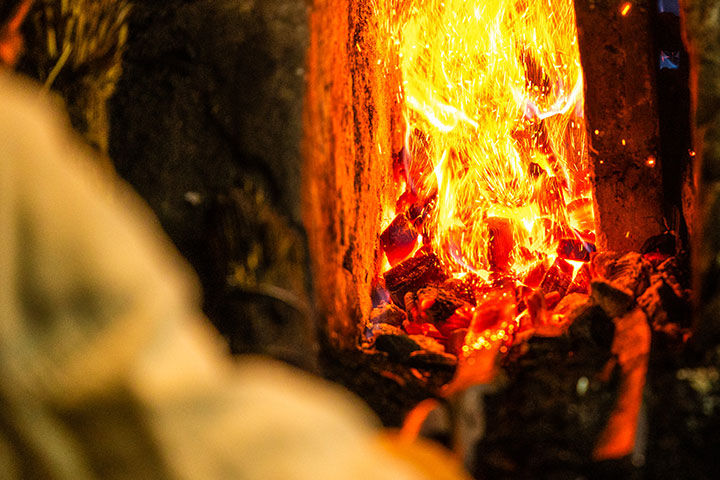
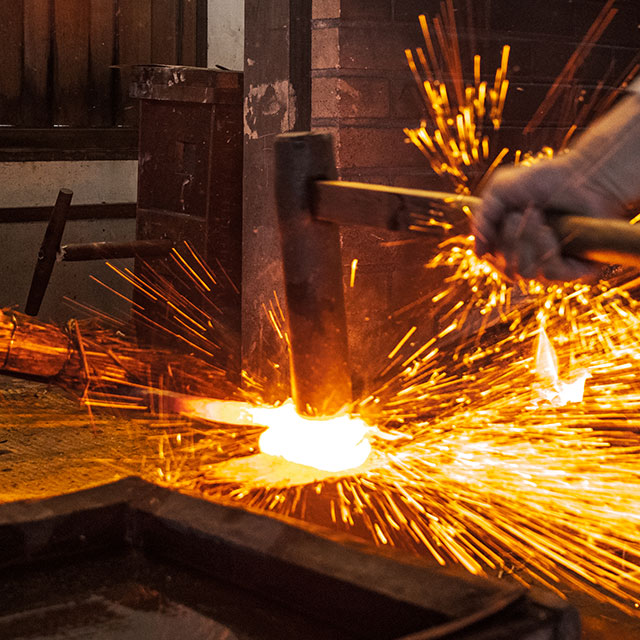
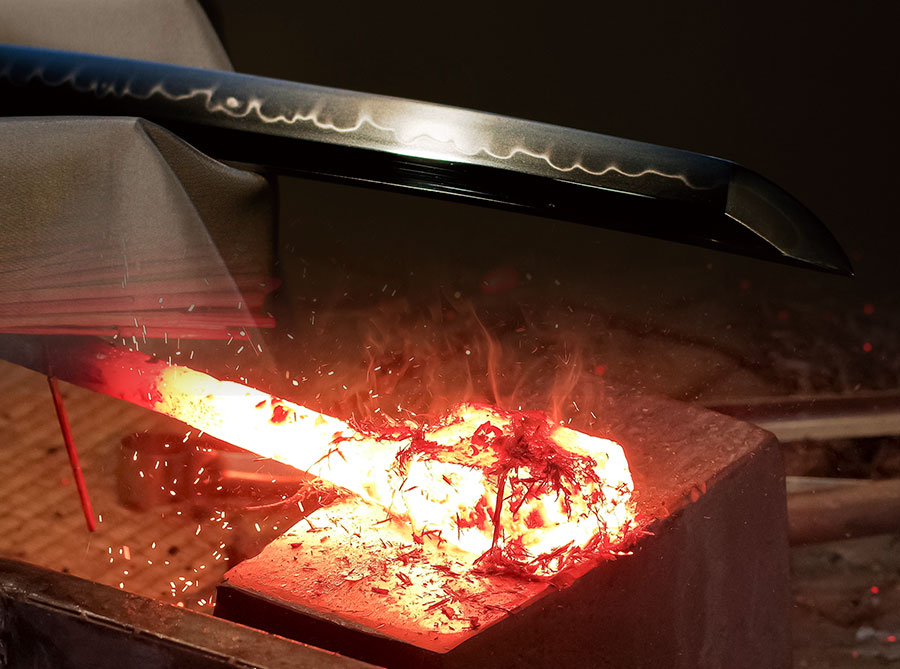
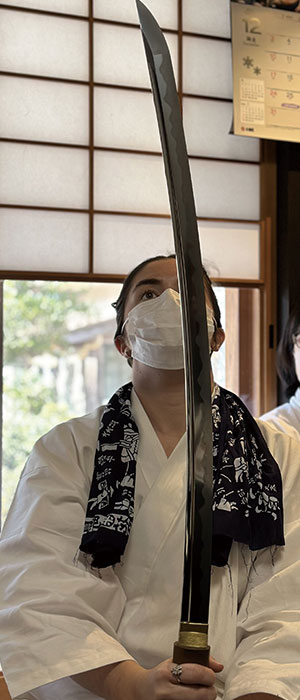
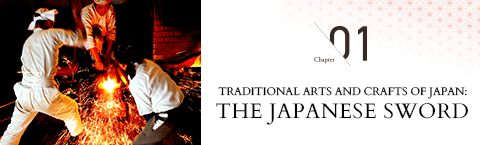
The artisans who forge Japanese swords continue to devote themselves,
day after day, to a craft handed down over hundreds, even thousands
of years. ey kindle the re, hammer the steel, and stand in silent
concentration before the blade. In each eeting moment, there is no
room for compromise.
Their work is not merely about creating an object. It is an act that
re ects their very way of life. Within each blade dwells an invisible
presence—what might be called a soul.
The bond between master and apprentice, and the unspoken
understanding among craftsmen, form a relationship that goes beyond
words. ese exchanges represent a form of creation that can never be
replaced by AI, a profoundly human act rooted in experience,
intuition, and shared time.
FROM IRON SAND TO TAMAHAGANE
— THE SACRED ORIGIN OF STEEL
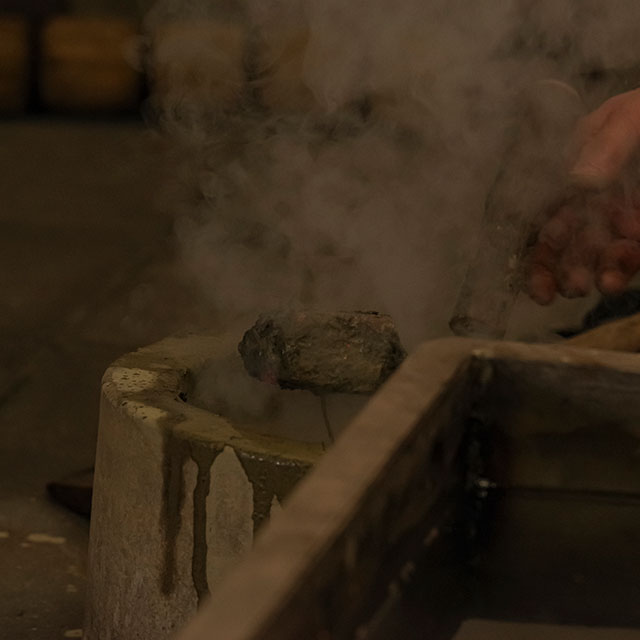
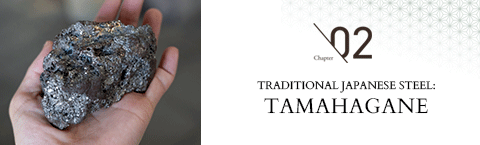
In a land scarce in iron ore, the people of Japan turned their attention to what seemed like nothing more than black
sand—iron sand gathered from granite mountains.At rst glance, it appeared to hold no value. Yet when poured into
a tatara furnace and heated together with human devotion and intention, it is transformed into a massive bloom of
iron. is iron is then carefully selected by human eyes and hands, eventually becoming tamahagane—a rare and
exceptional form of steel. is process is more than a material transformation. It embodies human wisdom, patience,
and a devotion akin to prayer.Tamahagane stands as a symbol of human ingenuity itself.
THE QUIET WILL
OF THOSE WHO CHOSE TO WALK ONE PATH
Swordsmiths. Charcoal makers. Those who preserve the tatara tradition. Cooks who have lived on this land for generations, and those who carry forward the spirit of the samurai. What they share is not merely talent or technique. It is a quiet will— the resolve to continue facing one thing, relentlessly. Even as times change, as trends come and go, even without assurance of recognition, they have continued, believing in their work. By living every day alongside their chosen path, a person eventually reaches a certain state of being. When one encounters such presence, they naturally begin to question themselves:
“What have I continued, this far?” “To what do I wish to devote the rest of my life?”
THE QUIET TRANSFORMATION
THAT EMERGES
The change this experience brings is not about becoming someone else. It is a gentle transformation— as though the axis of one’s life quietly settles into place. Just as iron sand becomes tamahagane, and tamahagane is re ned into a Japanese sword, people, too, pass through many stages, gradually approaching their own essence. Beyond titles or roles, one becomes able to answer the question “Who am I?” in one’s own words. What truly matters begins to appear— clearly, quietly. And then— You begin to like who you are, just a little more. You begin to cherish your life, just a little more. Subtle changes arise in your actions:
• Daily choices become more thoughtful • Time is used more meaningfully • Relationships grow gentler
Your life, too, quietly but surely, begins to change in quality.
A JOURNEY TO FULLY SAVOR LIFE
At the place where Japanese swords are born, what you encounter is not “strength,” but depth. Not competition. Not achievement. But a calm state reached through accumulation. When you breathe in this atmosphere, your understanding of what makes life rich begins to shift. is journey is time set aside to rediscover and savor your life— more deeply, more beautifully. Just as iron sand deepens into tamahagane, and tamahagane is re ned into a Japanese sword, the story of the sword quietly overlaps with your own story.
Toward a rich life that continues to shine even a thousand years from now, like a Japanese sword.
A SINGULAR JAPANESE SWORD EXPERIENCE
FOUND ONLY HERE
The Chugoku Mountains—the only region where the true origin of Japanese swords still remains. is is the sole area that has continuously produced tamahagane,an indispensable material for Japanese swords.
Raw materials (iron sand)
Ironmaking (tatara)
Forging (swordsmiths)
Here, even today, exist in direct continuity:
BEYOND THE FIVE TRADITIONS
— ANOTHER STORY OF THE JAPANESE SWORD
The Five Traditions refer to the ve renowned sword schools that shaped the history of Japanese swords: Bizen (Okayama), Yamashiro (Kyoto), Yamato (Nara), Mino (Gifu), and Soshu (Kanagawa). Each ourished within its own regional culture and climate.
Yet beneath them all lay a single foundation—the rare steel used to forge Japanese swords: *tamahagane*.
This *tamahagane* was born in the Chugoku Mountains, often called the backbone of the Japanese archipelago. Iron sand sleeping in the mountains, pure water, and abundant forests—these elements enabled tatara ironmaking from ancient times, giving birth to the steel that is the very “life” of the sword.
Some of today’s most accomplished swordsmiths have deliberately chosen this region as the place to forge their blades. eir challenge is the recreation of legendary swords from the past. This is not imitation. It is an act of reviving—the ames ancient masters saw, the steel they touched, the air they breathed. The same sword cannot be born without the same environment. at is why they returned here. Why forge a sword? Why do people devote their lives to re and steel? Rather than explaining in words, these craftsmen answer through the way they live. Here exists another story of the Japanese sword, one that continues beyond the Five Traditions.
WHAT IT MEANS TO OWN A JAPANESE SWORD
People own Japanese swords for many reasons:as family heirlooms,as symbolic monuments for companies or institutions.Beyond ownership lies deeper meaning. Historically, Japanese swords were treasured not only as weapons,but as talismans believed to cut through misfortune—protective symbols for their owners and families. ey represented family pride,o erings entrusted to the gods,and bridges between the human and the divine.Even today, this essential value remains unchanged.As monuments embodying a company’s philosophy and future vision. As protective swords entrusted with wishes for a child’s growth and safety.As gifts expressing gratitude and respect for great achievements.As art objects admired for their form and spiritual depth.Japanese swords continue to receive human intentions,to be passed down across time. ey are not tools to possess, but symbols re ecting one’s way of living and one’s wishes—deeply cherished by many.
ENCOUNTERS WITH THE PEOPLE WHO SHAPE
The Heart of the Japanese Sword
What gives form to this journey are the people who live on this
land.
Here you nd not only skilled artisans, but individuals rooted
deeply in their place, living each day while sincerely honoring the
values they hold dear.
Each person’s life journey.
e intentions passed down through generations.
e convictions they carry today.
And the quiet vision with which they face the future.
All of these overlap through shared time, gently re ning your
own values.
What e Heart of the Japanese Sword cherishes is not merely
“experience.”
It is time for people to meet—heart to heart.
Beyond the relationship of host and guest,
local and traveler,
you face one another as beings sharing the same moment,
the same air.
Please savor the deep dialogue and quiet resonance
born between people—
a form of connection that transcends community tourism.
PEOPLE YOU WILL MEET
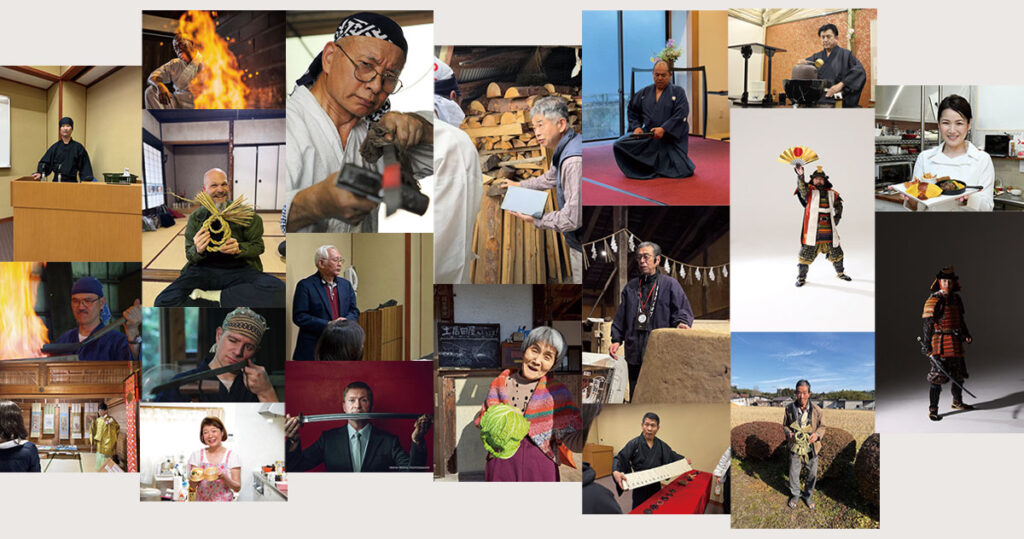
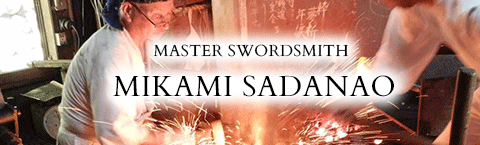
Sadanao Mikami — Swordsmith
A contemporary swordsmith devoted to tamahagane from the Chūgoku Mountains. He inherits the spirit of ancient blades and recreates it in the present. Within his serene blades resides the soul of the samurai.
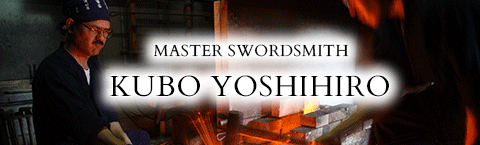
Yoshihiro Kubo — Swordsmith
A modern swordsmith who honors traditional techniques while pursuing his own aesthetic vision. Also a specialist in tatara ironmaking, he approaches steel and Japanese swords from both craft and scientific perspectives.
Johann Reitwiler (Mitsutsuna) — Swordsmith
A Swiss-born swordsmith of rare distinction. Through deep respect for Japanese culture and years of disciplined practice, he conveys the spirit of the Japanese sword to the world.
Hiroyasu Andō — Swordsmith
A contemporary swordsmith working in the historic land of Bizen-Osafune. Through meticulous study of classical blades, he forges swords that bridge past and present.
Nakamura — Japanese Sword Appraiser
An expert connoisseur who discerns the history and beauty of Japanese swords. He carefully interprets the era, meaning, and value engraved within each blade.
Seigo Mikami — Charcoal Master
A craftsman who produces the charcoal essential to sword forging. With uncompromising standards for heat and quality, he supports Japanese swordmaking at its very foundation.
Shinichi Shigeyoshi — Martial Artist
A martial artist dedicated to exploring the essence of bu (the martial way). Mastering classical martial arts, iaijutsu, and kenjutsu, he conveys samurai culture through embodied experience.
Chachamaru Horikawa — Samurai Performer
A warrior who brings the movements and spirit of the samurai into the present. Clad in armor, he revives historical presence and allows participants to experience the spirit of bushidō.
Kamejirō Honma — Samurai Performer
He explains the political and philosophical influence of the samurai in an accessible way, alongside Matsue Castle. His presence itself embodies the samurai spirit.
Mitsuo Asahi — Tatara Tradition Bearer
Born and raised at a tatara site, he is a living transmitter of its traditions. He conveys the history and spirit of tatara ironmaking and the culture of prayer embedded in steel.
Gesshō — Ninja
A modern ninja who communicates the philosophy and physical techniques of the shinobi. Through wisdom of stillness and motion, he unravels Japanese ways of thinking with clarity.
Akira Terai — Tea Master
A tea practitioner who conveys ma (space) and kokoro (heart) through the Way of Tea. Beyond thin tea, he also practices thick tea rooted in samurai tea traditions.
Keiji Abe — Chief Priest, Kanayago Shrine
A Shinto priest who serves Kanayago-no-Kami, the deity of ironmaking. He preserves and conveys the faith and prayers that reside at the origin of the Japanese sword.
Hidemasa Fujii — Martial Artist (Iaido)
An iaido practitioner who explores the principles of the sword and body mechanics. Through the sword, he demonstrates bu as a way of life.
Naohiko Sasaki — Director, Sengoku Garden History Museum
A researcher and storyteller of local Sengoku-period history. Blending historical fact with narrative, he vividly brings the land’s memory to life.
Tomie Hotta — Farmer
A farmer who lives in harmony with the land’s blessings. Her seasonal way of life itself tells the story of this region’s culture.
Sadao Matsue — Farmer
A producer devoted to agriculture that honors natural cycles. Known also as a master of shimenawa rope-making, he conveys Japan’s original landscapes and rural traditions.
Atsuko Nishimoto (“Acchan-sensei”) — Chef
A master of local cuisine who shares the wisdom of home cooking and regional flavors alongside local sake. Her warm presence creates moments that gently open the heart.
Mariko Ueda — Culinary Researcher
A food researcher pursuing delicious, allergy-friendly cuisine. Through the dining table, she weaves gentle stories of the land.
ONIGIRI HIROSHIMA (Nakatani & Ikeda) — Culinary Unit
A cooking unit that embodies Hiroshima’s blessings in rice balls. In a simple handful, they infuse the land’s strength and heartfelt intention.
Ayase Yamamoto — Chef
A chef who brings balance to the heart through food. With dishes that unite beauty and nourishment, she quietly deepens the afterglow of the journey.
Akira Tagawa — Cyclist Guide
A guide who leads journeys experienced through all five senses. By connecting landscape and body, he creates unforgettable memories.
Mutsumi Tsuyama — Experience Manager
A key on-site coordinator with extensive experience attending international VIPs. She carefully connects people and experiences, elevating the quality of the entire journey through attentive care.
Yona Ōshio — Experience Manager
A coordinator supporting journeys centered on Japanese swords, samurai culture, and adventure tourism. She naturally connects participants with the local community.
Karl Warsop — Experience Manager
A guide with global sensibility and deep understanding of Japan. An American long residing in the region, he is well versed in Japanese sword culture.
Yusaku Hotta — Storyteller
A storyteller who weaves narratives of Japanese swords, land, and people. He guides experiences into lasting memories of life itself.
This tour also creates encounters with many other local residents. The people you meet may vary depending on the experiences and programs.